China mobile payment leads the global penetration rate as high as 77%

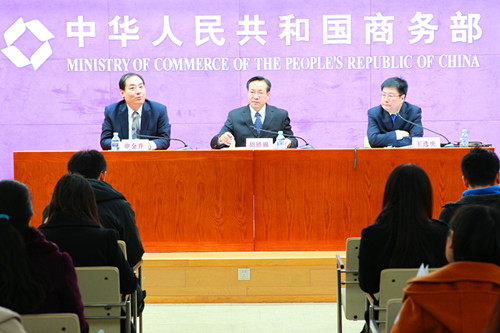
Xu Lejiang, Deputy Director of the United Front Work Department of the Central Committee, Party Secretary and Executive Vice Chairman of the All-China Federation of Industry and Commerce

Xu Lejiang, Deputy Director of the United Front Work Department of the Central Committee, Party Secretary and Executive Vice Chairman of the All-China Federation of Industry and Commerce

  CCTV News:At 14: 30 on December 4, "Summit Dialogue between Chinese and Foreign Ministers — Internet inclusive sharing was held in Huamei Palace, Wuzhen Pillow Water Hotel. With the aim of "strengthening policy communication and promoting exchanges and mutual learning", this forum will conduct in-depth discussions and exchanges in the form of keynote speeches and special discussions, so as to build an important international exchange platform for promoting Internet policy coordination and international cooperation between China and the world, promoting inclusive sharing of the Internet, and working together to build a community of destiny in cyberspace. CCTV reported the whole process.

  Xu Lejiang, deputy director of the United Front Work Department of the Central Committee, party secretary and executive vice chairman of the All-China Federation of Industry and Commerce, said that the digital economy has brought subversive changes to almost all industries and fields. First of all, digital technology has become the core factor of production in the era of digital economy. The deep integration and development of digital technology and all walks of life has changed all aspects of production, sales, life and social development, and promoted all-round innovation of supply chain management. This time, I went to Wenzhou, Ningbo and Jiaxing to investigate the development of Zhejiang’s private economy because I participated in the Zheshang Conference and world internet conference, and I was deeply touched. Zhejiang is a pioneer in the development of private economy. I have seen several companies, and they have done very well in the past economy. Now they are all adapting to the changes of this era, embracing the Internet and data. With the advent of big data in the Internet era, personalized services came into being.

  Second, the digital economy has become an important driving force for the conversion of old and new kinetic energy, and the deep integration of the digital economy and the real economy has become a general trend. A new generation of digital technology, represented by mobile Internet, big data, cloud computing, Internet of Things, virtual reality and artificial intelligence, has spawned a large number of new technologies, new formats and new models, and a series of new models and new markets have emerged, opening up a broader space for economic development.

  Third, the digital economy is reshaping the new pattern of manufacturing. Combine automation with technology, information and data. China has become a fertile ground for the development of digital economy. The China Municipal Government attaches great importance to the digital economy, and has implemented a series of major strategies and policy initiatives, such as strengthening the country through the Internet, further expanding and upgrading information consumption. China enterprises responded positively, and private enterprises also responded positively, seizing the development opportunity of digital wave, and realizing the leap-forward development of enterprises while promoting the rapid development of digital economy in China.

  Xu Lejiang introduced that everyone knows that this year’s Double Eleven e-commerce promotion activities, the whole network achieved sales revenue of 253.9 billion, a year-on-year increase of 50%. Customers all over the world are trading here at the same time. In addition, more than 800 million pieces of express delivery arrived in thousands of households a week later. I think these innovations in China are changing the development mode of the world economy. Mobile payment in China leads the world, with the annual transaction volume of mobile payment exceeding 150 trillion, and the penetration rate of mobile payment reaching 77%. Mobile payment represented by Alipay, WeChat payment and Jingdong payment has become the first choice of people’s payment methods. In terms of sharing economy, a series of sharing economies, such as car sharing, bike-sharing, accommodation sharing and fitness sharing, are booming. By the end of this year, China’s sharing economy will reach 4.7 trillion yuan, which is becoming a new economic growth point. In terms of artificial intelligence, China’s development level of artificial intelligence technology is in step with that of developed countries in the world, and it is in a leading position in image recognition, algorithms and other aspects, and has established a new generation of national open innovation platform for artificial intelligence. In terms of intelligent manufacturing, a large number of traditional industries are moving towards intelligent production. Enterprises in China are accelerating the pace of digital transformation. In the future, the degree of digital application of enterprises will play a decisive role. We see that some enterprises have become the leaders of digital economy, and most enterprises are still in the process of transformation. To successfully realize this transformation, we must accelerate the digital transformation. Accelerating digital transformation is an inevitable requirement for enterprises to improve quality and efficiency and move towards the middle and high end. It is necessary to use digital technology to transform business processes.Transform the mode and mode of our enterprise management, actively develop networked manufacturing and mass customized services, provide consumers with more personalized products and services, and form differentiated competitive advantages.

  As pointed out in the report of the 19th National Congress of the Communist Party of China, Socialism with Chinese characteristics has entered a new era, and the main contradiction in our society has been transformed into the contradiction between the people’s growing need for a better life and the unbalanced development. I think the development of Zhejiang’s private economy reflects this change. In 1984, I went to Japan as an intern and went abroad for the first time, bringing back 280 disposable lighters to my colleagues in the unit. Today, China has been able to make. The new problem faced by our enterprises is to find the survival value of enterprises, find the market positioning, and at the same time rely on the digital age and the Internet. To accelerate the realization of digital transformation, we must enhance our sense of urgency. To accelerate the realization of digital transformation, we must rely on scientific and technological innovation, build smart factories, digital workshops and smart parks, and improve the quality and efficiency of production and operation.

A group of "post-90s" nurses in Shanghai took care of another group of "post-90s" nurses and painted 200 paintings in five years.

  "Time has taken away youth, and years have eroded pride. Once a teenager, he is now in a hospital bed. This is the life course that each of us must go through. When you are old, who will be with you … …” The reading of this sitcom is straightforward, and it also puts forward a realistic and urgent proposition: providing for the elderly.

  A few days ago, the sitcom "Sunflower", which was performed by the "post-90 s" nurses in Hudong Nursing Home for the Aged in Yangpu District, was performed in Shanghai for some medical staff. Sunflower tells the true story of young nurses in this nursing home for the aged. Here, the "post-90 s" nurse team is the main force of nursing, and 13 young girls account for half of the nursing staff in the hospital. The oldest is 27 years old and the youngest is 23 years old. They take care of another group of "post-90 s", those old people in their eighties and nineties.

  When you treat the old man as your closest relative, your fear will dissipate.

  "My name is Ni Luyan, born in 1991, and I have worked in Hudong Nursing Home for the Aged for six years. Perhaps it is because I took care of my grandparents who were lying in bed since I was a child. When I filled in my volunteers for the senior high school entrance examination, I did not hesitate to choose the nursing major of Yangpu Health School. " Ni Luyan said that after graduation, she was assigned to Hudong Nursing Home for the Aged as she wished, and faced more "grandfathers and grandmothers" and found that "reality is not a fairy tale".

  In this nursing home for the aged, the average age of the elderly is 85, and there are many elderly people in their 90s. Most of them suffer from chronic diseases such as coronary heart disease, diabetes and sequelae of cerebral infarction, which lead to disability and dementia of the elderly. They have little ability to express clearly and lack the necessary reaction ability. This is the biggest difference between nursing homes and nursing homes.

  Grandma Xu in a ward is a patient who is difficult to care for by Ni Luyan. When she was admitted to hospital because of sequelae of cerebral infarction, her face was very thin and she had many pressure sores on her body. Blister sores are particularly easy to break, as long as they are broken, the wound will be eroded. When the illness was serious, Grandma Xu had as many as 16 blisters all over her body, and 40% of her skin was broken. Broken blister sores are often accompanied by thick yellow liquid flowing out, giving off a pungent smell.

  The smell made the elderly living in the same ward ask for a room change, and the nursing staff resigned one after another. Even the family members of the elderly did not want to stay long, so they left with a few words during the visit … … All this, the old man saw in his eyes, so he has been depressed and unwilling to cooperate with the treatment.

  "When these strangers are regarded as close relatives, the inexplicable fear and loss will be dispelled by a determination." Ni Luyan took care of the elderly.

  The stench of wound ulceration is prohibitive. Ni Luyan and her colleagues wear "thickened masks" with multiple layers of gauze. More than 50 pieces of gauze are used for each dressing change, and it takes an hour or two. They keep bending and standing for an hour or two, and concentrate on treating the wound. In order to make the old people clean and comfortable without peculiar smell, this group of nurses should change the medicine for Grandma Xu at least twice a day, four or five times a day. Dressing in winter, the elderly are afraid of the cold, and several nurses set up a "small tent" on the hospital bed with quilts and bamboo poles to keep warm and avoid the contact between broken skin and clothes.

  Everything comes to him who waits, and with continuous nursing, the blister gradually closes up until it disappears. A smile appears on the lost old man’s face, and he jokes and amuses with the nurse every day, just like a different person.

  The "painter" nurse painted 200 pictures in five years, knocking on the soft heart of the old man.

  What is the most important thing in nursing work? Fu Rong, a young nurse, blurted out, "Skilled." Bu Lina, the head nurse of Hudong Geriatric Nursing Home in Yangpu District, smiled and shook her head and said, "It is the temperature passed down from hand to hand."

  In this nursing home for the aged, there is also a "painter" nurse. Her name is Zhang Yuan.

  "For most patients in our nursing home, healing and rehabilitation seem to be distant dreams, and their emotions are inevitably pessimistic and disappointed." Zhang Yuan picked up a childhood brush, and painting played a strange role here.

  Grandpa Shi in the second ward is 86 years old, like an "old child". He especially likes to eat beef jerky, spiced beans and scallion cakes. He comes to everyone. The problem is that he has diabetes and can’t keep his mouth shut, which is going to cause trouble.

  Once, on the birthday of Wang Apo in the next ward, several nurses bought a cake for the old man. Grandpa Shi looked at it, staring at the cake with his eyes fixed on it.

  When the old man was young, he loved to eat commander Kay’s fresh milk cake. When he was old, he was sick and couldn’t eat it. Knowing this story, Zhang Yuan painted the old man’s favorite cake, colorful flowers, strawberries, cherries, yellow peaches and other fruits, and there was a bow next to the cake. I didn’t expect this to become a spiritual sustenance for the elderly! It turns out that the old man’s daughter now lives abroad, and the old man often ties a bow to his daughter’s braid when he is young.

  "The old people who live in nursing homes are most looking forward to the companionship of their loved ones and the visits of their children." Zhang Yuan said. Li Nainai’s son is very busy at work. The old man doesn’t talk, but he often stares at his mobile phone. Zhang Yuan made two cards for her, one with a cartoon image of her son and the other with a photo of Li Nainai. When the old man received the card, he cried with joy and kept saying, "Like! Really like! " The old man put the card on the bed and said that he missed his son. Looking at the card gave him comfort and sustenance.

  Grandpa Chen has lost his language function because of a cerebral infarction, and sometimes he is not conscious, but as long as his wife comes, he will try his best to support himself and see that their feelings are very good. But his wife is too old to come every day. Grandpa Chen often asks the nurse to call her, and then tries to get close to the receiver and listen to her voice.

  The sincere feelings of the old people moved Zhang Yuan and her colleagues. Zhang Yuan specially posted a photo of the old couple on his painting, painted the appearance of the head nurse calling, and wrote "Hold your hand and grow old with your son".

  During more than five years in Hudong Nursing Home, Zhang Yuan gave about 200 paintings to his grandparents. "Behind every painting, there is a story, a sustenance and a desire." She said so.

  The problem of providing for the aged comes to the fore, and the "post-90 s" holds up everyone’s tomorrow

  "Chaoyang" guards the "sunset", and such a warm-hearted picture is staged every day in Hudong Nursing Home for the Aged. This is not a microcosm of the social pension proposition.

  Shao Guihua is 86 years old, and his wife, Xu Zhengtai, is 91 years old. Because of cerebral infarction, he is paralyzed and can’t take care of himself. In January 2016, the old man first lived in Hudong Senior Care Home.

  As the saying goes, the golden nest and the silver nest are not as good as their own grass nest. When their wife is sick, she has to live in a nursing home. Shao Guihua has concerns. When she sees that most of them are post-90 s nurses, she even drums. "If not, go home."

  What she didn’t expect was that it took only half a year from "trying to live" to "staying" and now "loving to live". She said that the sincere help of nurses made her feel at home, what’s more, she really couldn’t take care of it herself — — — She is also an old man who is running for nine.

  "When the families of the patients we are facing are already old people, we know very well that the pace of an aging society is getting closer and closer." "How can 200 beds explore a better and more realistic pension model?" In Hudong Nursing Home for the Aged, the reporter heard such thoughts.

  As the only public nursing institution for the aged in Yangpu District, Hudong Geriatric Nursing Home is currently exploring "2+1" (second-class hospital+first-class hospital), "combination of medical care and nursing" and other new nursing modes for the aged, including remote nursing and home-based care.

  Everyone will grow old. In the future, it will not only be the "post-90s" but also the "post-90s" and "post-10th" who will take care of the elderly. Now, every post-90s is not only the sunset today, but also our hope for tomorrow. (Reporter Tang Wenjia)

Break the monopoly! Domestic movie screens appear overseas "China Zhizao" and rely on strength to "circle powder"

CCTV News:As the summer movie file continues to heat up, cinemas around the country have also ushered in the peak of watching movies. I don’t know if you have noticed when buying movie tickets. Nowadays, there are different movie theaters to choose from, such as IMAX Hall, Dolby Panorama Hall, CINITY Hall and so on. Among them, CINITY, a domestic film screening system with China’s core independent intellectual property rights, has become the first choice for many viewers in this summer file.

In Shanghai CMG Media Studio, CINITY Cinema has become the first choice for many audiences to watch movies.

In Xinming Cinema in Chengdu, Sichuan Province, the first CINITY LED curved film screen in China, which was officially put into use at the beginning of this year, has been upgraded in summer by virtue of the 16-meter-wide curved CINITY LED film screen, the arc-shaped embracing design and the high-brightness and high-contrast image quality effect brought by LED self-luminous technology. 

State-owned independent brands help improve the film experience.

At present, CINITY and CINITY LED projection systems of China Film have been gradually recognized and favored by domestic and foreign film industries.So, what are CINITY and CINITY LED? What kind of scientific and technological power did they use to enhance the audience’s viewing experience? Get to know each other together.

CINITY system combines the high and new technologies of 4K, 3D, high brightness, high frame rate, high dynamic range, wide color gamut and immersive sound, which can not only present ultra-high resolution pictures, but also provide surround sound effect.

Wu Ting, manager of CMG Media Studio Management Department,Compared with the traditional 2D movie theater, the brightness of the film is 2 to 3 times higher, and at the same time, it can present more picture details, making the film look more delicate and richer. Through the extremely accurate positioning of the sound source and the changing process, the audience can accurately and clearly feel the changes in the sound location, frequency and sound size, and completely immerse themselves in the sound and scene story of the film.

CINITY LED curved film screen is the world’s first cinema LED projection system supporting 4K/120 frame high format.

In the early days of film development, the frame rate of film movies was 24 frames per second, that is, 24 pictures were played per second. However, with the development of technology, the emergence of digital movies has made people’s requirements for film frame rate have also improved. CINITY’s 4K/120 frame is also the highest frame rate version in the film and television field.

CINITY LED has adopted all domestic technical solutions and products, breaking the technical barriers in the industry. Its exclusive film plate-making technology ensures the full expression of the unique characteristics of LED projection to the greatest extent, which makes the film present clearer and smoother pictures and richer and more colorful colors, greatly enhancing the immersion of watching movies.

Up to now, CINITY and CINITY LED projection systems have reached 180 screens in China, and 12 systems have been installed in Europe and the United States.

The world’s first transparent LED giant screen appeared in Nanjing.

In May this year, the National Development and Reform Commission and other six ministries and commissions jointly issued the "Implementation Plan for Promoting Equipment Renewal in the Field of Culture and Tourism", pointing out that the large-scale implementation of the cinema LED display system renewal plan will provide viewers with more comfortable, convenient and rich film consumption services.

Not long ago, the world’s first "sound-transmitting LED giant screen" certified by DCI took the lead in a cinema in Nanjing, providing viewers with better film consumption services.

In the LED giant screen hall of a cinema in Nanjing, the documentary film "Earth Pulsation: Extreme Survival" is being shown.

This transparent LED movie screen is 20.48 meters wide and 10.8 meters high, supports 4K ultra-high definition resolution, and has a high refresh rate of 96 frames, which is four times that of the traditional projection screen. In addition, relying on the unique module perforation design of the product, the large screen puts the main channel audio back, and the sound cavity is realized through the structure of LED box.Ensure the sound transmission effect of the sound.

The upgrade of the screen has also brought a win-win situation for the cinema.

Domestic film projection systems are exported overseas.

At present, the domestic film projection system has broken the monopoly position of foreign countries on the core technology of digital movies.Not only in the domestic market, but also exported to overseas.

This screen showing movies is the HeyLED movie screen independently developed by China.

Chen Weijun, general manager of Shenzhen Times Huaying Technology Co., Ltd. introduced,Its brightness can reach 5 to 10 times that of the original projector, and the contrast ratio of ordinary movies is about 300: 1, but the LED can achieve more than 30,000: 1, so its black place is pure black, the bright place will be very bright, and the details of the bright and dark parts of the movie will be better restored.

This 10-meter-wide LED movie screen has more than 110 boxes, consisting of more than 2.3 million LED light beads, covering the entire light-emitting surface. When a movie is shown, according to the different brightness and color of the played image in different positions, some LED beads will be made to glow, and the rest of the LEDs will not glow at all, thus showing "white" and "black" close to the real world.

At present, HeyLED is not only widely used in cinemas in major cities in China, but also exported to the United States, the United Arab Emirates, Romania and other countries. This is the first time that China’s self-developed LED digital film projection system has been exported overseas.

From making brands to setting standards, the influence of China films has increased.

At present, China has become the country with the largest number of advanced LED film projection system manufacturers and cinemas. There are 18 manufacturers of global LED film projection system that have passed DCI certification, among which 13 are from China.

In addition, China has also actively participated in the formulation of international standards, from branding to setting standards, so that the influence of China’s film industry continues to increase.

In addition to continuous breakthroughs in independent research and development of projection technology, the first film ISO international standard "Technical Requirements and Measurement Methods for Stereoscopic Projection of Digital Cinema" led by China Academy of Film Science and Technology has been officially released recently.

The release of this international standard has filled the gap in China’s film international standard, and also enhanced the international discourse power of China’s film technical standard.

Dong Qiangguo, deputy director of China Film Science and Technology Research Institute, introduced that there is one (in the industry)unifiedGlobal internationalSpecification, "Technical Requirements and Measurement Methods for Stereoscopic Projection of Digital Cinema" is a global industry technical specification for the first time led by China, and it has also won the dominance for domestic film equipment to enter the international market and participate in international competition.

Be alert! A bar-related epidemic situation was judged to be closely connected with 4402 people.

This article is about 2570 words, and it takes 7 minutes to read.

On June 10th, at the 361st press conference of novel coronavirus epidemic prevention and control work, Yang Beibei, deputy head of Chaoyang District, introduced that as of 15: 00 on June 10th, there were 8 new COVID-19 virus-infected people in Chaoyang District, of which 2 were found in social screening, and 6 were found among control personnel, and they were all transferred to designated hospitals for treatment.

June 5th.

7:25-7:35, familymart (beiyuan road No.1 Store)

8:00-20:00, Hejia Hospital, Jingbei Women and Children Hospital

8:50-22:00, Huoshaoyun Hotel Dai Family Restaurant (Jingguangqiao Branch)

9:00-18:00, Happy Valley

9:35-21:58, Mingshui Mingyuan Hairdressing Salon on the 1st floor of Building 8, Guanhu International.

12:00-13:00, Paradise Supermarket Bar, No.13 Gongti North Road.

18:30- 7:00 the next day, Paradise Supermarket Bar, No.6 Gongti West Road.

22:40- 0:20 the next day, Xiao Zhang brochette bar (gym shop)

June 6th.

8:00-20:00, Hanting Hotel Shilibao Branch

9:00-14:30, Hongzhuangyuan Branch, Panda Star Kitchen Food City, Qingnian Road.

At 9:20-18:50, fish was raised in No.1 yard of Xiaohaizi Village, Guangqu East Road.

9:30-22:00, Mingshui Mingyuan Hairdressing Salon on the 1st floor of Building 8, Guanhu International.

10:55-20:40, Huoshaoyun Hotel Dai Family Restaurant (Jingguangqiao Branch)

17:10-19:00, Haidilao (Qingnian Road Branch)

18:35- 7:00 the next day, Paradise Supermarket Bar, No.6 Gongti West Road.

19:10-19:20, Menggouhao Life Fresh Supermarket (Yaojiayuan Store)

19:30-20:00, Lijue Modeling Hairdressing Shop (Yaojiayuan Branch)

20:20-20:25, take-out window of KFC Blue Bridge Store.

20:40-23:00, Building 9, Guandongdian North Street

20:50-20:55, the newsstand in the northeast corner of the south gate intersection of the underwater world with rich sports and rich culture.

20:55-24:00, Helens Bar, No.8 Gongti West Road

From 21: 00 to 23: 00, Xiaoliakou barbecued Northeast cuisine (Dawang Road Branch).

June 7th

1:25-1:30, the newsstand in the northeast corner of the south gate intersection of the underwater world in the rich country of sports and sports.

1:45-2:45, Jindingxuan Restaurant (Tuanjiehu Branch)

2:00-3:00, Paradise Supermarket Bar, No.13 Gongti North Road.

2:00-12:00, Hanting Hotel Shilibao Branch

6:00-13:00, Row 8, East Zone, Dayang Road Market Living Area

At 9:20-19:30, fish was raised in No.1 yard of Xiaohaizi Village, Guangqu East Road.

10:00-22:00, Chunlu Restaurant on the first floor of Block A of Ocean International Center.

11:40-11:45, Yaojiayuan Community Convenience Service Center Wholesale Market.

13:00-15:05, Hu. Teahouse Hotpot Restaurant

13:30-20:30, East Gate Basketball Court of Hongbo Park.

14:00-14:30, Yiyi Modeling (Chaoyang Joy City Store)

15:00-16:30, Vientiane Hui Shopping Mall Hotwind Clothing Store, CoCo Coco Tea Shop.

16:00-17:00, Nan Hotpot (Qingnian Road Branch)

16:20-21:00, Hongzhuangyuan Branch, Panda Star Kitchen Food City, Qingnian Road.

17:00-17:30, Perfect Diary (Chaoyang Joy City Store)

17:00-19:00, Huohuohuo Restaurant (Chaoyang Joy City Branch)

18:35- 7:00 the next day, Paradise Supermarket Bar, No.6 Gongti West Road.

19:05-19:15, Nanchengxiang Restaurant (Qingnian Road Branch)

20:30-20:40, Mi Xue Bing Cheng (Baiziwan Branch)

21:00-22:10, the fried noodles stall on the first floor of Building 26, Nanxinyuan, South Mill.

21:20- 2:15 the next day, Pure K KTV, No.6 Gongti West Road.

21:30-22:15, Haidilao (Zhongjun World City Branch)

22:15-22:20, 7-11 Convenience Store (Zhongjun World City Store)

22:15- 2:00 the next day, Longzhen Kaiguo Internet Cafe in Building 26 of Nanxinyuan.

22:30- 00:30 the next day, Building 6, Yard 2, Yaojiayuan Xili.

June 8

0:00-2:00, COMMUNE Bar (Zhongjun World City Branch)

2:00-5:35, the second exposure shop in Building 102, East District, Hangcheng, Kyoto, is immersed in scripts.

2:00-4:00, emergency department of Chaoyang Hospital.

7:55-20:00, Hejiajia Jingbei Women and Children Hospital.

8:00-20:00, Hanting Hotel Shilibao Branch

8:50-13:00, Huoshaoyun Hotel Dai Family Restaurant (Jingguangqiao Branch)

From 9: 00 to 14: 00, Qingnian Road Panda Star Kitchen Food City Hongzhuangyuan Branch

At 9:25-22:00, fish was raised in No.1 yard of Xiaohaizi Village, Guangqu East Road.

9:35-20:00, Mingshui Mingyuan Hairdressing Salon on the 1st floor of Building 8, Guanhu International.

10:00-22:00, Chunlu Restaurant on the first floor of Block A of Ocean International Center.

16:40-20:00, Good World Shopping Mall

17:00-21:00, Hongzhuangyuan Branch, Panda Star Kitchen Food City, Qingnian Road.

19:10- 7:00 the next day, Paradise Supermarket Bar, No.6 Gongti West Road.

22:00- 2:25 the next day, Helens Bar, No.8 Gongti West Road.

23:55- 0:05 the next day, Building 2, Daojiayuan Community.

June 9

0:05-11:00, Hanting Hotel Shilibao Branch

0:55-1:05, full-time convenience store at No.3 Chaoyang Road.

2:00-3:00, Paradise Supermarket Bar, No.6 Gongti West Road.

8:00-11:00, Hemujia Medical Beauty and Plastic Surgery Center

9:00-11:30, catering in Chunlu, Floor 1, Block A, Ocean International Center.

At 9:20-16:00, fish was raised in No.1 yard of Xiaohaizi Village, Guangqu East Road.

9:30-11:00, Mingshui Mingyuan Hairdressing Salon on the 1st floor of Building 8, Guanhu International.

10:10-11:30, Huoshaoyun Hotel Dai Family Restaurant (Jingguangqiao Branch)

11:50-12:45, full-time convenience store at No.3 Chaoyang Road.

12:35-12:55, the fruit shop at the entrance of Anjialou Village and the small shops nearby.

16:45-19:00, Hongzhuangyuan Branch, Panda Star Kitchen Food City, Qingnian Road.

Please take the initiative to report to the community (village), work unit and hotel where you live, or call the hotline of Chaoyang CDC at 87789709.

Epidemic situation of supermarket bars in Shetiantang

It is judged that 4402 people are intimately connected.

Yang Beibei, deputy head of Chaoyang District, said that Chaoyang District insisted on making the system fast. According to the requirements of the 8-hour working mechanism, it accelerated the flow tracing overnight, quickly controlled risks and prevented the epidemic from spilling over.

The prevention and control measures in all aspects, such as control, diversion, traceability, classification, transshipment, isolation, etc., were quickly implemented for the newly added positive personnel in this area and the personnel associated with this area in other areas. Up to now, 4,402 people (including those who are empty at the same time) and 52 people were classified, and the control measures have been implemented for those involved in Chaoyang District, and the personnel involved in other areas have been transferred to the joint investigation.

In view of the key risk point Paradise Supermarket Bar, a comprehensive and in-depth investigation was carried out. Up to now, 54 employees and 3 residents of Paradise Supermarket Bar, involving Chaoyang District, have been concentrated and isolated, and those involving other areas have been spread; At present, a total of 1330 people who have visited Paradise Supermarket Bar have been sent to Chaoyang District, and all of them involved in Chaoyang District have been put under control, and those involved in other areas have been spread. At the same time, adhere to the same inspection of people, things and environment. Environmental sampling was conducted in the bar of Paradise Supermarket, and 880 points were collected, including toilet pit, floor drain, tables and chairs, bar, wine cellar, escalator, refrigerator, wine bottle, door handle, air outlet of air conditioner, etc. The test results were all negative.

The Guangcai International Apartment, which is involved within 200 meters around the bar of Paradise Supermarket, was controlled, and the residents in the community were tested for nucleic acid. A total of 665 people were collected, and all the results were negative.

Original title: "Be alert! A bar-related epidemic situation judged 4402 people "

Read the original text

Annual Report of Beijing Fengtai District People’s Government on Government Information Disclosure in 2020

  This report is made in accordance with Article 50 of the Regulations on the Openness of Government Information in People’s Republic of China (PRC) (hereinafter referred to as the Regulations on the Openness of Government Information).

  I. General situation

  In 2020, in order to further implement the government information disclosure work and provide better government information disclosure services, we will conscientiously implement the new development concept under the guidance of Socialism with Chinese characteristics Thought of the Supreme Leader in the New Era, adhere to the basic principle of openness and transparency, and guarantee the people’s right to know, participate and supervise, so as to facilitate citizens, legal persons or other organizations to obtain it according to law. Conscientiously do a good job in voluntary disclosure, disclosure according to application, government information management, platform construction, supervision and guarantee, expand the scope of disclosure, improve the disclosure mechanism, and provide guarantee for building a service-oriented government.

  (a) take the initiative to disclose the situation

  First, strengthen and improve the main channels of publicity. Through holding party group meetings and government information disclosure work meetings for many times, we explored new forms of information disclosure policies, implemented new requirements of relevant work, constantly improved and improved the supervision mechanism of various assessment indicators, formulated practical implementation plans, and implemented the information disclosure work to full-time staff of departments to ensure the effective implementation of government information disclosure work, so that the government information disclosure work progressed smoothly and without errors. In 2020, 10,246 pieces of information were voluntarily disclosed on the website of Fengtai District Government, 4,695 pieces of information were voluntarily disclosed by Weibo, 2,500 pieces of information were voluntarily disclosed by Beijing Fengtai WeChat WeChat official account, 4,784 pieces of information were voluntarily disclosed by the client of Beijing Fengtai, 446 pieces of information were voluntarily disclosed by WeChat official account in today’s headline, and WeChat official account was released by Aauto Quicker Fengtai. The second is to strengthen the top-level design, print and distribute "Main Points of Government Affairs Openness in Fengtai District in 2020" and "Decomposition of Key Tasks in the Region", clarify the guiding ideology, basic principles, work objectives and important paths of government affairs openness in the new era, and form a long-term working mechanism for information submission, recording, disclosure and archiving.

  (two) according to the application for public handling.

  In 2020, the whole region received a total of 1,056 applications for government information disclosure, and 969 applications were completed, with 100 carried forward from the previous year and 87 carried forward to the next year. Judging from the handling results: 281 cases were made public; 35 pieces were partially disclosed; 59 pieces were not made public; Unable to provide 526 pieces; 54 cases were not handled; Others handled 14 pieces.

  (three) the standardization and management of government information resources.

  According to Article 2 of the Regulations on the Openness of Government Information, government information refers to information produced or obtained by administrative organs in the process of performing administrative functions, and recorded and preserved in a certain form. The disclosure of government information takes two ways: voluntary disclosure and application disclosure.

  Active disclosure. All units shall dynamically update the full list of voluntary disclosure and the government information disclosure guide in strict accordance with the requirements of the Regulations on the Openness of Government Information, so as to ensure that the channels and contents of government information disclosure are accurate and detailed, and facilitate the public to obtain accurate government information. The website of the district government has opened "Five Openings" related columns, and all units disclose the corresponding government information for the public to understand and facilitate public affairs in accordance with the requirements of openness in decision-making, implementation, management, service and results. Before formulating policy documents, solicit opinions from the public through the collection column of policy documents on the website of the district government, so as to improve the scientific nature of policy formulation. Publish the catalogue of administrative normative documents registered by the district government on a monthly basis. Regularly transfer normative documents to relevant municipal departments. Regularly disclose the implementation of government affairs to the public through columns such as important livelihood projects on the website of the district government. Through government announcements and government standing Committee columns, the government management information of district governments and district-level units is announced to the public. Publicize the service information of individuals, legal persons and departments through the government service section. Publicize the results of administrative licensing, administrative coercion, administrative punishment and other information through the credit service section.

  According to the application disclosure. Handle the disclosure of government information according to the law and regulations, summarize the key points of accepting the application in the current month on a monthly basis, continue to promote the transformation of government information from application to active disclosure, and improve the level of government information disclosure in the whole region. Organize and release the laws and regulations, judicial interpretations, trial regulations of the High Court, as well as the laws and departmental rules and court precedents that are often used in practical work to all units in the region, so as to improve the legal literacy of the personnel of each unit who handle applications and improve their ability to handle documents according to applications.

  (four) the construction of government information disclosure platform

  Actively disclose the platform construction. In terms of decision-making, the website of the district government has set up a column for soliciting opinions on policy documents, and all units need to solicit opinions from the public through this column before formulating policies. In terms of publicity, columns such as important livelihood projects were opened, and the progress of various livelihood projects was publicized quarterly. In terms of management publicity, the government executive meeting column was opened to make the meeting contents of the district government executive meeting public. In terms of service disclosure and results disclosure, the intermediary service column was opened to disclose the intermediary service institutions and specific intermediary service matters of each unit to the public.

  Publicize the platform construction according to the application. In order to improve the efficiency of all units in the region to disclose applications and better serve the masses, the district government is actively promoting the construction of a district-level application-based disclosure platform. Relying on the platform can achieve accurate retrieval of application content, strengthen departmental linkage, facilitate information retrieval, shorten the waiting time for people to obtain government information, reduce the waste of resources of administrative organs, and improve the efficiency of all units in the region in handling applications; For different types of application content, the staff can carry out special study to improve the application skills of corresponding answers; All kinds of laws and regulations related to information disclosure, judicial interpretations, trial regulations of the High Court, and precedents of information disclosure cases published by the platform can enable all units to realize open self-study upon application and improve the professional ability of staff.

  (five) the supervision and protection of government information disclosure and education and training.

  The first is to strengthen business training. In order to improve ideological understanding, enhance the sense of responsibility, standardize the work of government information disclosure, and improve the professional level of government information disclosure, in 2020, the whole region will carry out two centralized trainings on government information disclosure. The training mainly focuses on the specific requirements of government information disclosure, legal application and matters needing attention, combined with specific practical cases, targeted analysis and explanation, and training from theoretical support and effective work skills. Carry out various forms of regular training, through video conferencing, WeChat group centralized Q&A, etc., carry out the training of open business according to application in stages, and carry out centralized training as appropriate to improve the professional quality of government information disclosure of staff in the whole region.

  The second is to strengthen business supervision. Strengthen the overall planning of the disclosure of applications in this district, take the initiative to understand the difficulties encountered in the disclosure of applications by all units, complete a round of active contact work for the disclosure of applications by all units in the district every quarter, and guide and solve the problems in the disclosure of applications by all units. Smooth all kinds of application acceptance channels of all departments in the region, and conduct full coverage inspection on the electronic acceptance channels publicized in the information disclosure guide of all units every quarter.

  (six) the results of work assessment, social appraisal and accountability.

  Check the government information disclosure work of all units in the whole region every quarter, and incorporate the government information disclosure work into the performance appraisal at the end of the year. No accountability in Fengtai District in 2020.

  Second, the initiative to disclose government information

Active disclosure of government information

  Iii. Receiving and handling applications for government information disclosure

Receiving and handling government information disclosure applications

  Four, the government information disclosure of administrative reconsideration and administrative litigation.

Administrative reconsideration and administrative litigation of government information disclosure

  Five, the main problems and improvement of government information disclosure work.

  (1) Main problems

  First, there is a lack of active publicity awareness and low publicity efficiency. Due to the epidemic situation or lack of energy, the information update is overtime. The staff of some units are not aware of publicity, and the disclosure of government information is not timely, which affects the smoothness of public access to government information and the efficiency of policy answers. Second, there is a lack of quality information and the quality of information disclosure is poor. Some units pursue the quantity of information release too much and ignore the necessity and practicability of public information. It is not conducive to the long-term development of government information disclosure. The third is the lack of innovation. At present, some platforms with little reading, poor interaction and low attention lack the creativity and content of keeping pace with the times, which makes the normalization of public work slow and the utilization rate of audience groups low.

  (II) Improvement situation

  The first is to enhance the awareness of active publicity. Clarify the importance of openness and normalization, focus on combing the areas where government information disclosure involves people’s livelihood and development planning, and set up special columns on the website of the district government for regular maintenance and update. In each quarter, the city (district) third-party assessment agencies after the assessment, according to the assessment results for special rectification, and the rectification results will be included in the year-end performance appraisal. Through online and offline study and analysis, each unit has made public cases according to its application, especially typical cases that triggered reconsideration litigation, conducted in-depth study and discussion, and put forward optimization and improvement measures.

  The second is to implement public work responsibilities. Strengthen self-examination and supervision of information disclosure websites. Carry out real-time supervision and self-examination around the website of the district government and new government media, and regularly sort out and analyze the requirements and standards for publicity. Improve the interactivity of policy answers and the satisfaction rate of the masses. And set up a special governance team for real-time monitoring and timely rectification.

  The third is to broaden the form of information disclosure. According to the requirements of the municipal government affairs service bureau on the index of government website construction, in addition to completing the standardization adjustment of the website pages of the district government, the website interaction and policy answering functions are enriched. In terms of interaction, make full use of the website special column to collect high-quality suggestions and enhance the innovative service ability. In terms of policy interpretation, the practicality of policy document interpretation is strictly required to avoid the situation of "copy and paste" interpretation, further improve the practicality of policy interpretation, and ensure that the enterprise masses can understand and understand it well. In terms of public participation, we will make full use of various forms such as press conference, conference opening system, government affairs open day, Weibo, WeChat and APP client to disclose government information, improve the coverage of government information, and enhance the recognition and support of enterprises for government work.

  Vi. Other matters that need to be reported

  If you want to know more about Fengtai District Government in Beijing, please visit the website of Fengtai District People’s Government in Beijing or pay attention to "Beijing Fengtai" Weibo, WeChat WeChat official account, today’s headline WeChat official account and the client, "Fengtai released" Aauto Quicker and Tik Tok WeChat official account.

After seven megacities, who can advance to the eighth place?

  There is an impressive line in the TV series Nothing But Thirty: "This city is full of dreams and temptations."

  For ordinary people in big cities, the most intuitive factors to evaluate the happiness of a city are income, resources and urban public services. One fact that cannot be ignored is that these factors are often highly positively related to the size and energy level of a city, that is, the bigger the city, the higher the income of residents, the more resources and opportunities, and the more convenient life.

  Perhaps this is why many people yearn for big cities. Recently, the "2020 China Census by County" compiled by the Office of the Leading Group for the Seventh National Census in the State Council shows that there are currently 105 big cities in China, including 7 megacities, 14 megacities, 14 type I megacities and 70 type II megacities.

  Data source: 2020 China Census Data by County.

  It is worth noting that there are only seven megacities at the top of the pyramid, namely Shanghai, Beijing, Shenzhen, Chongqing, Guangzhou, Chengdu and Tianjin. And who will be the next megacity is particularly interesting.

  Key factors of urban population size and rating

  Measuring the size of a city is nothing more than two key indicators, population and area. However, the larger the population and the larger the area of a city, it does not mean that it can be ranked as a super-large or mega-city.

  In the central and western regions of China, especially in the northwest and southwest, some prefecture-level cities are very large, and some of them are even equivalent to a coastal province. However, due to insufficient population and relative backwardness in economy and urban infrastructure, there is still a big gap from the concept of mega-cities and mega-cities.

  In some economically developed areas, although some cities give people the impression that they are bustling and crowded, they have not been selected, such as Suzhou, Xiamen, Fuzhou and Ningbo, which are popular metropolises, and they have not been selected as megacities. The reason is simple. To measure whether a city is super-large, super-large or other types, it mainly depends on the urban population, not the permanent population of the city.

  According to the relevant classification standards in the Notice on Adjusting the Classification Standards of Urban Scale issued by the State Council in 2014, cities are divided into five categories and seven grades according to the number of permanent residents in urban areas: cities with a permanent population of more than 10 million are megacities, and 5 million to 10 million are megacities, while 3 million to 5 million I-type cities and 1 million to 3 million II-type cities are also called megacities.

  The second mega-cities are Wuhan, Dongguan, Xi ‘an, Hangzhou, Foshan, Nanjing, Shenyang, Qingdao, Jinan, Changsha, Harbin, Zhengzhou, Kunming and Dalian. Most of the permanent residents in these cities have exceeded 10 million, and Zhengzhou, the highest city, has reached 12.6 million. However, due to the large rural population and county population in these cities, the urban population is still between 5 million and 10 million.

  Take Suzhou as an example. In 2021, it ranked sixth in the country with a GDP of 2.27 trillion yuan, with a permanent population of nearly 13 million, but the urban population was only about 4 million. The reason behind this is that Suzhou’s counties and even towns are very developed, with a large population. For example, Kunshan, a county-level city, has a GDP of 474.81 billion yuan and a population of over 2 million in 2021. So that the population of Suzhou city is counted, but it seems to have a small proportion.

  In addition, there are some cities with relatively developed economy and society, which are small in size and belong to "short and pithy". For example, Xiamen, as a sub-provincial city, is considered qualified in terms of administrative level, reputation and per capita GDP, but Xiamen has the smallest land area among the first-and second-tier cities in China, with only 1,700.61 square kilometers and a permanent population of only 5.28 million.

  Therefore, for this list, we can’t be too "based on this", and the size of the city does not lie in its area and population.

  Popular candidate cities: Wuhan, Dongguan and Xi ‘an.

  Among the 14 mega-cities, Wuhan (9.953 million), Dongguan (9.5576 million) and Xi ‘an (9.2837 million) are the top three cities with an urban population of over 9 million. In other words, the next mega-city is likely to be born among these three cities.

  Judging from the current population of these three cities, Wuhan is only 47,000 people away from the threshold of 10 million megacities. If there are no accidents, Wuhan will become the next megacity.

  Although according to the data of the Seventh Five-Year Plan, the resident population of Wuhan is 12.3265 million, which is less than that of Zhengzhou’s 12.6006 million. The total population of Wuhan ranks second in central China and eleventh in China. However, the position of "the most populous city in central China" was replaced by Zhengzhou, largely because of the impact of the epidemic.

  In fact, the permanent population and urban population in Wuhan are likely to be underestimated. According to the Statistical Bulletin of Wuhan National Economic and Social Development in 2021, the permanent population of Wuhan reached 13,648,900 at the end of 2021, an increase of 1,201,200 over the end of last year. The annual increment of more than one million shows that the permanent population of Wuhan has begun to return sharply, and it is showing a blowout trend.

  In addition, 1.73 million young people have chosen to stay in Wuhan since the implementation of the "Million College Students Studying in China for Entrepreneurship and Employment Project" in Wuhan in 2017. According to public data, in 2021 alone, there were 345,000 college students studying in Wuhan, among whom the number of fresh graduates studying in Han universities increased by 9.4% compared with 2020.

  In addition to Wuhan, Dongguan, with the second largest population in megacities, is also a strong contender for megacities. At present, the built-up area of Dongguan has reached 1,194.31 square kilometers, which has reached the level of a megacity. In terms of the key indicator of urban population, in 2021, the permanent population of Dongguan reached 10.4667 million, breaking through the 10 million mark for the first time. Among them, the urban population reached 9,557,600.

  Judging from the urbanization rate (urban population/total population), the urbanization level of Dongguan has reached 91%, which is the highest among the three cities.

  Besides, Dongguan is still a very young city, with only 5.47% of the population over 60 years old. In recent years, the attraction of Dongguan has been continuously enhanced. According to the report released by relevant institutions, the talent attraction index of Dongguan ranked 16th among 100 cities in 2022, up 7 places from last year’s national ranking.

  Following Wuhan and Dongguan, the urban population of Xi ‘an also exceeds 9 million, but it is nearly 800,000 people short of the threshold of 10 million. In 2021, the number of permanent residents in Xi ‘an will increase by 210,100. Even if these incremental populations are all urban population, it is still difficult for Xi ‘an to exceed 10 million in a short time.

  Urban energy level is related to resource allocation, but the purpose is always people.

  It is said that population is an important indicator reflecting the attractiveness, vitality and strength of a city. Under the background of urbanization in China, whoever has more population will win the initiative in the new round of urban competition.

  Correspondingly, the promotion of urban energy level not only means that the attractiveness of the city is strengthened, but also means that more resources can be obtained.

  Taking the urban planning and construction of subway as an example, according to the standards issued by the relevant state departments before, the application for subway needs to meet three conditions: the general budget revenue of local finance is above 10 billion yuan, the gross domestic product is above 100 billion yuan, and the urban population is above 3 million people.

  It is not difficult to find that the requirement of applying for the subway for urban population is based on the urban population. It is also easy to understand that only when the urban population is large enough, the actual utilization rate of the subway will be high, the per capita construction and operation costs will not be so great, and the social benefits will be greater.

  Not only the subway, but also from the efficiency of economic development, the higher the urban energy level is, the better the labor productivity is, and the greater the urban resource utilization efficiency is. Just like the innovation resources in the United States are concentrated in the metropolitan areas such as Silicon Valley, Los Angeles and new york, this is a universal law that is applicable all over the world.

  Of course, once again, to measure the size of a city, we can’t just look at the population, and we can’t do without the comprehensive strength of economy, science and technology, trade, education, transportation, medical care and other fields. Those cities that have yet to be advanced need to "choose the good ones and follow them" in comparison with the top cities to comprehensively improve their soft and hard strength.

  The size of the city, in the final analysis, should be implemented in the vital interests and actual feelings of every citizen. Let the citizens benefit from the development of the city, and have sufficient conditions to pursue the lofty ideals of life and run a happy family life. This is the pride of a city.

  Poster design Zhou Huan

3+1+2, Sichuan, Henan, Shaanxi, Yunnan, Qingning, Inner Mongolia, seven provinces, the new college entrance examination reform plan landed.

  “3+1+2”! The new college entrance examination reform programs in Sichuan, Henan, Yunnan, Inner Mongolia, Shaanxi, Qinghai and Ningxia have landed.

  [Sichuan]

  Cancel the division of arts and sciences and start the "3+1+2" mode! Sichuan released the "Implementation Plan for Comprehensive Reform of College Entrance Examination"

  On the morning of June 27th, Sichuan Provincial Department of Education held a news briefing on the comprehensive reform of college entrance examination. At the meeting, Zou Jin, director of the Education Department of Sichuan Province, introduced the Implementation Plan for Deepening the Comprehensive Reform of Examination Enrollment in Colleges and Universities in Sichuan Province (hereinafter referred to as the Plan), and introduced the relevant situation and main contents.

  The cover journalist learned from the "Program" that this measure includes many changes in examination subjects, grades and admission methods. According to the reform plan, the comprehensive reform of college entrance examination will be started in 2022 and implemented in 2025 as a whole, forming a college entrance examination enrollment model with classified examination, comprehensive evaluation and multiple admissions, and improving the college entrance examination enrollment system and mechanism that promotes fairness, scientific selection of talents and strong supervision.

  After the reform, the "3+1+2" model was adopted instead of the liberal arts and sciences: "3" was the three national unified examination subjects of Chinese, mathematics and foreign languages (including English, Russian, Japanese, French, German and Spanish); "1" is the preferred subject, and candidates choose one subject independently from physics and history; "2" is a re-selected subject, and candidates choose two subjects independently from four subjects: ideology and politics, geography, chemistry and biology.

  Candidates’ total cultural score consists of three national unified examination subjects of Chinese, mathematics and foreign languages and three optional examination subjects, with a total score of 750 points. Among them, the scores of Chinese, mathematics and foreign languages in the national unified examination subjects are all 150 points, with a total score of 450 points; The scores of the first selected subjects are presented in the original points, and the scores of the re-selected subjects are presented in the grade conversion points. The scores of all three subjects are 100 points, with a total score of 300 points. Grade conversion scoring method shall be formulated separately.

  In terms of examination requirements, according to the needs of school-running orientation and professional talent training for students’ professional foundation, ordinary colleges and universities scientifically and reasonably put forward the requirements of candidates’ preferred subjects and re-selected subjects for the major (category) from the six ordinary high school academic levels of ideological and political, history, geography, physics, chemistry and biology, and announced them to the public in advance.

  In terms of admission methods, the unified examination enrollment of ordinary colleges and universities is planned, underlined and filed separately according to the two categories of physics and history, and is admitted in two stages: undergraduate and junior college. Except for the batches admitted in advance, the candidates voluntarily consist of "colleges+professional groups", and the unified admission mode of parallel volunteer is implemented.

  [Henan]

  “3+1+2”! Henan College Entrance Examination Comprehensive Reform Plan Released

  On the morning of June 27th, the Information Office of Henan Provincial Government held a press conference on the comprehensive reform of college entrance examination in Henan Province to introduce the relevant situation of the comprehensive reform of college entrance examination in Henan Province.

  The reporter learned from the press conference that from the autumn of 2022, Henan will start the comprehensive reform of the college entrance examination. The newly enrolled senior one students will no longer be divided into arts and sciences, but will implement the "3+1+2" mode of subject selection system.

  3: It is Chinese, Mathematics and Foreign Languages, which is a must.

  1. Choose one from history and physics;

  2. Choose two courses from ideological politics, geography, chemistry and biology.

  The "3+1+2" mode of Henan college entrance examination has been implemented since 2025, and the full score of the new "3+1+2" mode is 750 points.

  Yunnan

  In 2022, senior one began to implement the "3+1+2" model! The comprehensive reform of college entrance examination in Yunnan Province started in an all-round way.

  On the morning of June 27th, the Information Office of the People’s Government of Yunnan Province held a press conference on the interpretation of the implementation plan for deepening the comprehensive reform of examination enrollment in ordinary colleges and universities in Yunnan Province. The reporter learned from the meeting that from 2022 (the first-year students of ordinary high schools enrolled this fall), the Yunnan college entrance examination will implement a new "3+1+2" college entrance examination model, and the college entrance examination will be accepted according to the national unified college entrance examination results and the academic level test results of ordinary high schools, with reference to the comprehensive quality of students. Ordinary high school academic level examination is divided into qualified examination and selective examination.

  The examination subjects are composed of the national unified college entrance examination subjects and the optional examination subjects in the "Ordinary High School Level Examination". The national unified college entrance examination consists of three subjects: Chinese, mathematics and foreign language (English, Russian, Japanese, French, German and Spanish), regardless of arts and sciences, using the national volume, in which the foreign language examination consists of two parts: listening and written examination.

  The elective examination subjects are six subjects, namely, ideology and politics, history, geography, physics, chemistry and biology, which are unified by Yunnan Province in proposition, examination and marking. According to the requirements of relevant majors in colleges and universities and their own interests, candidates must and can only choose one of the two subjects of physics and history as the first choice, and then choose two of the four subjects of ideology, politics, geography, chemistry and biology as the second choice.

  The examination subjects are called "3+1+2" for short, where "3" means Chinese, mathematics and foreign languages, "1" means one of physics and history, and "2" means two of ideological and political, geography, chemistry and biology.

  In terms of the academic level examination of ordinary senior high schools, the qualification examination includes 14 subjects, including Chinese, mathematics, foreign languages, ideology and politics, history, geography, physics, chemistry, biology, information technology, general technology, music, art, physical education and health, as well as the experimental operation test of three subjects, and the results of the qualification examination are important for the graduation of ordinary senior high school students, the recognition of high school equivalent, and the enrollment of classified examinations in higher vocational colleges. The selective examination includes six subjects, namely, ideological and political, history, geography, physics, chemistry and biology, which are divided into preferred subjects and re-selected subjects. The results of the selective examination are included in the total enrollment scores of ordinary colleges and universities, that is, in the new college entrance examination results.

  The total score of six subjects in the new college entrance examination is 750 points, and the candidates volunteer to be composed of "professional groups of colleges and universities", and parallel volunteer is applied. The full marks of Chinese, mathematics and foreign languages are all 150, with a total score of 450. The full marks of all subjects in the optional examination are 100, among which, the scores of two preferred subjects (one selected by the examinee) in physics and history are included in the college entrance examination results according to the original scores, and the scores of four re-selected subjects (two selected by the examinee) are included in the college entrance examination results according to the grade conversion scores.

  In terms of enrollment methods, from 2025, in the enrollment of ordinary colleges and universities, plans are divided according to the two categories of physics and history, and the enrollment is divided into two stages: undergraduate and junior college. After the announcement of the total score of the candidates, fill in the volunteers, and the candidates’ volunteers are composed of "professional groups of colleges and universities", and the parallel volunteer is implemented. Ordinary colleges and universities put forward the requirements of selective examination subjects according to the needs of school-running orientation and professional talent training for students’ professional foundation, and announced them to the public in advance.

  [Inner Mongolia]

  Cancel the division of arts and sciences and implement the "3+1+2" model, and start the comprehensive reform of college entrance examination in Inner Mongolia.

  The reporter learned from the press conference of "Comprehensive Reform of College Entrance Examination in Inner Mongolia Autonomous Region" held by the Information Office of the Autonomous Region Government that the "Implementation Plan for Deepening the Comprehensive Reform of College Entrance Examination in Inner Mongolia Autonomous Region" was officially issued. As one of the fifth batch of eight provinces and autonomous regions in China to start the comprehensive reform of college entrance examination, the first-year high school students who entered school in the fall of 2022 started the comprehensive reform of college entrance examination.

  According to the relevant person in charge of the Education Department of the Autonomous Region, the comprehensive reform of the college entrance examination mainly includes four aspects: First, improve the ordinary high school level examination system; The second is to standardize the comprehensive quality evaluation system of ordinary senior high school students; The third is to deepen the reform of unified college entrance examination enrollment; The fourth is to promote the enrollment reform of classified examinations in higher vocational colleges. By 2025, a college entrance examination enrollment system with classified examinations, comprehensive evaluation and multiple admissions will be basically formed, and the institutional mechanisms for promoting fairness, scientific talent selection and strong supervision will be improved.

  Examination enrollment of general higher education includes unified examination enrollment of general colleges and universities (general college entrance examination) and classified enrollment of higher vocational colleges. After the implementation of the "new college entrance examination" in our region, the subjects of the general college entrance examination are no longer divided into arts and sciences, but the "3+1+2" model is implemented. Different from the current college entrance examination enrollment model based on "unified national college entrance examination results", after the reform, our district will adopt the college entrance examination enrollment model of "unified college entrance examination results and academic level examination results with reference to comprehensive quality evaluation", that is, "two bases and one reference", and implement parallel volunteer’s enrollment.

  Under the "3+1+2" mode, the total score of the examinee’s cultural course is 750 points. Among them, "3" means three unified college entrance examination subjects, namely Chinese, mathematics and foreign languages, which are no longer divided into arts and sciences. The test paper is a national unified proposition, with a perfect score of 150 for each subject. "1" and "2" are optional subjects in the academic proficiency test, and the test papers are unified by the autonomous region. "1" means that candidates choose one of the physics or history subjects as the first choice, and each subject has a perfect score of 100 points, which is included in the total score of the college entrance examination culture class with the original score of the paper. "2" means that candidates choose two subjects from four subjects, namely, ideology, politics, geography, chemistry and biology, as re-election subjects, and each subject has a perfect score of 100 points, which is included in the total score of the college entrance examination culture course according to the grade conversion score. In the "3+1+2" mode, there are 12 combination modes for students to choose independently, and the combination of arts and sciences is conducive to candidates’ strengths and weaknesses, and to increase their choice space.

  In terms of enrollment, starting from 2025, colleges and universities will adopt the mode of "two bases and one reference". One is based on the scores of three subjects in the national unified college entrance examination: Chinese, mathematics and foreign languages; The second is based on the scores of three elective subjects in the high school level examination. It is a highlight of the "New College Entrance Examination" to regard the results of the high school level examination as an important basis for college enrollment, aiming at guiding students to study every course carefully, avoiding serious partiality and creating conditions for colleges and universities to select talents.

  Ordinary high school academic level examination is divided into qualified examination and selective examination. The qualification examination is the main basis for the graduation of ordinary senior high school students and the recognition of their high school equivalent, covering 13 subjects, such as ideology and politics, Chinese, mathematics, foreign languages, history, geography, physics, chemistry, biology, information technology, general technology, art, physical education and health, which are stipulated in the national curriculum plan for ordinary senior high schools. According to the teaching progress, the exam is taken immediately after the completion of study, and the exam results are presented as qualified and unqualified, and the results are not included in the total score of the college entrance examination. Those who pass the exam will be awarded a high school diploma.

  Selective examination, as an important basis for college enrollment, is conducted at the same time as the national unified college entrance examination, and its results are included in the total score of the college entrance examination. The examination subjects include six subjects: politics, history, geography, physics, chemistry and biology. Students in ordinary high schools should apply for selective examination subjects on the basis of "qualified" results in corresponding subjects.

  "One Reference" is an important reference to take the comprehensive quality evaluation results of senior high school students as the examination enrollment of colleges and universities. When the examination results are the same, colleges and universities can give priority to admission and arrange majors. Comprehensive quality evaluation is a daily dynamic evaluation involving students, classmates, teachers and parents. The evaluation content includes five aspects: ideological and moral character, academic level, physical and mental health, artistic accomplishment, labor and social practice. At present, the Education Department has established an information management platform for students’ comprehensive quality evaluation, which makes a realistic record of students’ daily performance. Once the publicity is confirmed, it cannot be changed to ensure fairness and justice.

  In the enrollment process of colleges and universities, the current college entrance examination enrollment system is divided into liberal arts and sciences, and there are only two fixed combinations of literature and science. After the implementation of the "new college entrance examination", the enrollment plan will be compiled, underlined, filed and admitted separately according to the physical combination and historical combination of candidates. At the same time, the original batch and two batches of undergraduate courses were merged into one batch, and parallel volunteer was enrolled.

  The classified examination of higher vocational colleges adopts the examination mode of "cultural quality+vocational skills", which is generally arranged before the general college entrance examination. Candidates who apply for higher vocational colleges but are not admitted can continue to take the general college entrance examination. Students who have passed the classified examination of higher vocational colleges and those who have passed the general college entrance examination have the same effect, and there is no difference.

  In order to further do a good job in policy interpretation and answering questions, the Education Department of the Autonomous Region opened a consultation telephone number 0471-2856836 (9:00— 12:00; 14:30— 17:30), the consulting platform (scan the QR code below to register and log in) and the e-mail gkzhggzx@163.com, and provide consulting services for the majority of candidates and parents.

  Shaanxi

  The implementation plan for the comprehensive reform of the college entrance examination in Shaanxi Province was released, and the "3+1+2" model will be implemented in 2025 as a whole.

  Today (June 27th) morning, the Information Office of Shaanxi Provincial Government held a press conference to introduce the implementation plan for deepening the comprehensive reform of examination and enrollment in colleges and universities in Shaanxi Province (hereinafter referred to as the implementation plan). Western Network Shaanxi Headline reporter learned from the meeting that the "Implementation Plan" clarifies that Shaanxi Province, as one of the fifth batch of eight provinces (regions) to start the comprehensive reform of the college entrance examination, will be implemented from the first-year high school students enrolled in the fall of 2022, and will be implemented as a whole in 2025. The "3+1+2" mode is adopted in the examinations of ordinary colleges and universities.

  The "3+1+2" model is: "3" refers to the unification of three subjects of college entrance examination: Chinese, mathematics and foreign languages; "1" and "2" are optional examination subjects, in which "1" refers to selecting one preferred subject from physics or history subjects, and "2" refers to selecting two re-selected subjects from ideology, politics, geography, chemistry and biology.

  The total score of candidates consists of three unified college entrance examination scores and three ordinary high school academic level selective examination scores, with a full score of 750. Among them, three unified college entrance examination subjects are included in the total score of candidates using the original scores, with a perfect score of 150 points for each subject; The preferred subjects (physics or history) in the selective examination are included in the total score of the candidates using the original scores, with a perfect score of 100 points for each subject; Re-selected subjects are included in the total score of candidates according to the grade, with a perfect score of 100 points for each subject.

  "3+1+2" mode breaks the traditional "fixed combination" examination mode of arts and sciences and gives students more "choices". It changed the mode of enrolling students according to the unified college entrance examination results, and changed to the mode of "two bases and one reference". It has broken through the single college entrance examination admission path and changed to the examination enrollment mode of "classified examination, comprehensive evaluation and multiple admission".

  In terms of enrollment, according to the "Implementation Plan", since 2025, in addition to early batches, it will be admitted in two batches: undergraduate and specialist. The enrollment of ordinary colleges and universities is divided into enrollment plans, underlined and filed separately according to the combination of physics subjects and history subjects, and parallel volunteer is enrolled by the way of "college professional group".

  In addition, the "Implementation Plan" also stipulates that the examination enrollment of higher vocational colleges is relatively separated from that of ordinary colleges and universities, and the evaluation method of "cultural quality+vocational skills" is implemented. Clarify the evaluation and admission methods for ordinary high school graduates, secondary vocational school graduates, and social personnel with the same educational level in high school, improve the training mode of recruiting five-year junior high school graduates to connect secondary vocational education with higher vocational education, and build a modern vocational education system that connects secondary vocational education with junior college vocational education.

  Qinghai

  Cancel the division of arts and sciences! Implement the "3+1+2" mode! Qinghai launches comprehensive reform of college entrance examination.

  On June 27th, a press conference on comprehensive reform of college entrance examination in Qinghai Province was held in Xining. Shen Hongxing, Party Secretary and Director of the Education Department of Qinghai Province, introduced the "Implementation Plan for Deepening the Comprehensive Reform of Examination Enrollment in Colleges and Universities in Qinghai Province". Relevant persons in charge of the Provincial Party Committee, the Provincial Department of Finance, the Provincial Department of Education and the Provincial Education Admissions Examination Institute answered reporters’ questions on the spot and responded positively to concerns.

  The main responsible comrades of the Provincial Education Department introduced that Qinghai started the comprehensive reform of college entrance examination in 2022 according to the deployment requirements of the CPC Central Committee and the State Council. The Provincial Party Committee and the provincial government have issued the Implementation Plan for Deepening the Comprehensive Reform of Examination Enrollment in Colleges and Universities in Qinghai Province, which marks the comprehensive start of the comprehensive reform of college entrance examination in Qinghai Province.

  It is understood that Qinghai Province will start the comprehensive reform of college entrance examination enrollment from the first-year students who enter school in the fall of 2022. By 2025, an examination enrollment system of classified examination, comprehensive evaluation and multiple admission will be basically formed, and the system and mechanism for promoting fair, scientific talent selection and strong supervision will be improved. After the start of the reform, the division of arts and sciences was abolished, the subjects of college entrance examination were reformed, and the scores of selective examination subjects were included in the total scores of college enrollment. The enrollment of higher vocational colleges was relatively separated from that of ordinary undergraduate education examinations, and a multiple enrollment model was established based on the unified scores of college entrance examination and high school academic level examination and comprehensive quality evaluation.

  Improve the reform of the academic level examination system in ordinary high schools. Ordinary high school academic level examination is divided into qualified examination and selective examination. The qualification examination covers 14 subjects except labor education and comprehensive practical activity courses stipulated in the national ordinary high school curriculum plan, and the examination results are the main basis for the graduation of high school students and the identification of high school equivalent. The selective examination includes six subjects, namely, ideology and politics, history, geography, physics, chemistry and biology. According to their own interests, ambitions, advantages and the requirements of elective subjects in colleges and universities, candidates first choose one subject in history and physics as their first choice, and then choose two subjects in ideology and politics, geography, chemistry and biology as their second choice. The examination results are taken as an important basis for enrollment in colleges and universities and included in the total score of college entrance examination.

  Standardize the comprehensive quality evaluation system of ordinary senior high school students. The evaluation content includes five aspects: ideological and moral character, academic level, physical and mental health, artistic accomplishment, labor and social practice, which reflects students’ all-round development and personality characteristics and serves as an important reference for college enrollment. The Provincial Department of Education will also establish an information management platform for the comprehensive quality evaluation of senior high school students in the province, strengthen the process and normalization supervision, and ensure that the evaluation is objective, true, accurate and credible.

  Deepen the reform of examination enrollment in colleges and universities. In 2025, the comprehensive reform of the college entrance examination in Qinghai Province was carried out, and the "3+1+2" examination mode was implemented. The examination subjects included three national unified college entrance examination subjects (Chinese, mathematics and foreign languages), one preferred subject for the selective examination of science level (history or physics) and two re-selected subjects for the selective examination of science level (ideological and political, geography, chemistry and biology). The total score of candidates in the college entrance examination is 750 points, among which the original scores of Chinese, mathematics and foreign languages in the national unified college entrance examination subjects are included in the total score of candidates, with a full score of 150 points in each subject; The original scores of the preferred subjects are included in the total scores of candidates, with a perfect score of 100 points for each subject; Re-selected subjects are included in the total score of candidates with grade scores, with a perfect score of 100 points for each subject. When enrolling students in colleges and universities, according to the two categories of history and physics, the enrollment plan, the admission score line and the file admission are compiled respectively, and the "major (category)+college" parallel volunteer file admission model is implemented.

  Further improve the classified examination system in higher vocational colleges. The province will actively promote the reform of classified examinations in higher vocational colleges and gradually improve the evaluation method and selection system of "cultural quality+vocational skills". The cultural quality evaluation of ordinary high school graduates uses the results of the high school academic level qualification test, and the vocational adaptability test is organized and implemented by higher vocational colleges. Secondary vocational school graduates’ cultural quality examination is arranged and standardized by the Provincial Department of Education, and the examination organization and vocational skills test are organized and implemented by higher vocational colleges. Retain the channel for candidates to enter higher vocational colleges by taking the unified college entrance examination.

  [Ningxia]

  The comprehensive reform of college entrance examination in Ningxia has been launched in an all-round way, and it has been implemented since the first-year high school students who entered school in the fall of 2022.

  The Information Office of the Ningxia Hui Autonomous Region Government held a press conference this morning on the Implementation Plan for Deepening the Comprehensive Reform of Examination Enrollment in Colleges and Universities in Ningxia Hui Autonomous Region. Wang Chengfeng, Party Secretary and Director of the Education Department of the Autonomous Region, Wang Hongwei, Deputy Secretary of the Education Working Committee of the Autonomous Region, and Xia Xin, Dean of Ningxia Education Examinations Institute, introduced the situation and answered questions from reporters.

  Comrade Wang Chengfeng, Party Secretary and Director of the Education Department of the Autonomous Region:

  The comprehensive reform of college entrance examination is related to the talent training and selection plan of the party and the country, bearing the yearning for a happy life and the expectation of a bright future of thousands of families, and has a great and far-reaching impact on accelerating the modernization of education, building an educational power and running a satisfactory education for the people. With the approval of the Ministry of Education for the record, the people’s government of the autonomous region today issued the Implementation Plan for Deepening the Comprehensive Reform of College Entrance Examination in Ningxia Hui Autonomous Region, which was later announced to the public, marking the comprehensive start of the comprehensive reform of college entrance examination in Ningxia.

  I. Drafting background of the Implementation Plan

  First, the CPC Central Committee the State Council made major decisions and arrangements. In November 2013, the Third Plenary Session of the 18th CPC Central Committee adopted "the Central Committee of the Communist Party of China’s Decision on Several Major Issues of Comprehensively Deepening Reform", which made comprehensive arrangements for promoting the reform of the examination enrollment system. In August 2014, General Secretary of the Supreme Leader stressed at the fourth meeting of the Central Leading Group for Comprehensively Deepening Reform that the examination enrollment system is a national basic education system, and it is necessary to promote education equity and improve the level of talent selection through deepening reform. In the same year, the State Council issued the "Implementation Opinions on Deepening the Reform of the Examination Enrollment System", requiring all localities to deepen the reform of the examination enrollment system and build an examination enrollment model with classified examinations, comprehensive evaluation and multiple admissions.

  Second, the Ministry of Education has set a time limit for reform. In 2021, the Ministry of Education organized experts to evaluate the basic conditions for the comprehensive reform of the college entrance examination in Ningxia. According to the evaluation results, eight provinces and autonomous regions including Ningxia were identified as the fifth batch of provinces for the comprehensive reform of the college entrance examination, starting from the first-year high school students who entered school in the fall of 2022. During the formation of the Implementation Plan, the Ministry of Education gave careful guidance and strong support to the comprehensive reform of college entrance examination in Ningxia.

  Third, the Party committee and government of the autonomous region have put forward clear requirements. The Party committee and government of the autonomous region attach great importance to the comprehensive reform of the college entrance examination in our region. The leading comrades in charge have repeatedly given instructions, put forward clear requirements, held meetings to study and personally promoted the implementation. In May this year, a leading group for the comprehensive reform of college entrance examination was established, headed by Liang Yanshun, secretary of the Party Committee of the autonomous region, and Zhang Yupu, chairman of the autonomous region, which provided a strong organizational guarantee for the comprehensive reform of college entrance examination in our region.

  Second, the drafting process of the Implementation Plan

  The first is the stage of studying policies and learning from experience. Under the leadership of the Party Committee and government of the autonomous region, the Education Department set up a special work promotion group, organized special forces, thoroughly studied the relevant policy documents of the central government, fully considered the original college entrance examination model, the development level of basic education, higher education and the layout of disciplines and specialties in our region, and fully learned from the experience and practices of the first four batches of reform provinces.

  The second is the stage of soliciting opinions, revising and perfecting. The opinions and suggestions of the relevant departments of the autonomous region, the admissions committees of cities and counties (districts), the administrative departments of education, colleges and universities, secondary vocational schools and ordinary high schools were extensively solicited, and they were discussed and demonstrated for more than 10 times, revised and improved for more than 20 times, and the opinions of the Ministry of Education were solicited for many times on the relevant issues involved in the reform, forming a draft of the Implementation Plan.

  The third is the stage of review, examination and approval. After expert argumentation, risk assessment and legality review, the "Implementation Plan" was deliberated and adopted at the meeting of the leading group for education of the Party Committee of the autonomous region, the executive meeting of the government of the autonomous region and the meeting of the Committee for Deep Reform of the Party Committee of the autonomous region, and submitted to the Ministry of Education and submitted to the Central Reform Office for review and filing.

  III. Main contents of the Implementation Plan

  First, improve the ordinary high school academic level examination system. Ordinary high school academic level examination is divided into two types: qualified examination and selective examination, including examination object, examination subject, examination content, examination arrangement and examination result.

  The first is the test object. The object of the qualification examination is the students in ordinary high schools in the whole region, and other students and social workers in high schools can also voluntarily sign up for the qualification examination. The object of the selective examination is those who meet the registration conditions of the unified entrance examination for ordinary colleges and universities in that year and have signed up for the unified college entrance examination in Ningxia.

  The second is the examination subjects. The qualifying examination covers 14 subjects, including Chinese, mathematics, foreign languages, ideology and politics, history, geography, physics, chemistry, biology, music, fine arts, physical education and health, information technology and general technology, which are stipulated in the national senior high school curriculum plan. The elective examination subjects include six subjects: politics, history, geography, physics, chemistry and biology.

  The third is the content of the exam. The content of the qualification examination is the compulsory content stipulated by the national curriculum standard for ordinary high schools; The content of selective examination is the compulsory and selective compulsory content stipulated by the national curriculum standard for ordinary high schools.

  The fourth is the examination arrangement. The qualification examination will be implemented from the first-year students who entered the school in the autumn of 2022, and will be arranged by the autonomous region according to the national ordinary high school curriculum plan and curriculum standards. From 2025, the selective examination will be organized once a year, which will be conducted in the same period as the national unified college entrance examination, and will be organized and implemented by the autonomous region.

  The fifth is the test results. The results of the qualification examination are presented as "qualified" or "unqualified" and included in the comprehensive quality evaluation file. The "qualified" results are valid for a long time. In the selective examination, the scores of the first choice subjects are presented with the original scores, and the scores of the re-selected subjects are presented with grade conversion scores, which are valid in the current year.

  Second, standardize the comprehensive quality evaluation system of ordinary senior high school students. The comprehensive quality evaluation of ordinary senior high school students mainly reflects the all-round development of students’ morality, intelligence, physique, beauty and labor, and is an important reference for college entrance examination enrollment.

  The first is the evaluation content. The comprehensive quality evaluation of ordinary senior high school students mainly includes ideological and moral character, academic level, physical and mental health, artistic accomplishment, labor and social practice.

  The second is the evaluation procedure. Ordinary high schools set up students’ comprehensive quality evaluation committees to carry out students’ comprehensive quality evaluation. Under the guidance of teachers, students record their growth process realistically, select representative important activity records and typical factual materials, and uniformly import them into the comprehensive quality evaluation management platform of ordinary senior high school students in Ningxia. After confirmation by publicity, students’ comprehensive quality files are formed.

  The third is to evaluate the use. The comprehensive quality evaluation results of ordinary senior high school students are an important reference for students’ graduation and enrollment in ordinary colleges and universities. Ordinary colleges and universities shall, according to their own school-running characteristics and personnel training requirements, formulate scientific and standardized methods for the use of comprehensive quality evaluation results and announce them to the public in advance.

  Third, reform and unify the college entrance examination enrollment system. Since 2025, ordinary colleges and universities have been selected on the basis of candidates’ national unified test scores and ordinary high school academic level test scores, with reference to the comprehensive quality evaluation of ordinary high school students, referred to as "two bases and one reference".

  The first is the examination subjects. The national unified examination subjects are Chinese, mathematics, and foreign languages (including English, Russian, Japanese, French, German, and Spanish), regardless of arts and sciences, using the national volume, in which foreign language subjects include listening and written examination. Elective examination subjects are selected by the candidates according to the requirements of college subjects selection and their own special interests. First, they choose one course in physics or history, and then two courses in ideology, politics, geography, chemistry and biology, that is, the "3+1+2" mode. Candidates who apply for sports, art and other majors must also take the corresponding professional examinations.

  The second is the examination arrangement. The national unified examination is organized according to the time stipulated by the Ministry of Education, and the selective examination is arranged at the same time as the national unified examination.

  The third is the composition of the total score of candidates. The total score of candidates consists of three national unified examination subjects and three optional examination subjects, with a full score of 750. Among them, the subjects of the national unified examination, Chinese, mathematics and foreign languages, are included in the total score of candidates using the original scores, with a perfect score of 150 points for each subject. In the preferred subjects of the selective examination, the original scores of physics or history are included in the total scores of candidates, with a full score of 100 points for each subject. The two subjects independently selected by the candidates in ideological politics, geography, chemistry and biology are counted into the total score of the candidates after being graded, with a perfect score of 100 for each subject.

  The fourth is enrollment. From 2025, the enrollment of ordinary colleges and universities will implement the "College Professional Group" parallel volunteer enrollment mode. According to the two categories of physics and history, the enrollment plan will be divided, underlined separately and enrolled separately.

  Fourth, improve the enrollment system of classified examinations in higher vocational education. The classified enrollment of higher vocational education is relatively separate from the unified college entrance examination enrollment, which is mainly arranged in the spring, and the evaluation of "cultural quality+vocational skills" is implemented.

  First, counterpart enrollment in higher vocational education. For the enrollment of secondary vocational school graduates, cultural quality tests (Chinese, mathematics, English) are organized and implemented by the autonomous region; Vocational skill testing is organized and implemented by relevant higher vocational colleges.

  Second, higher vocational (junior college) colleges enroll students through separate examinations. For the enrollment of ordinary high school graduates, the original scores of Chinese, mathematics and foreign language subjects in the qualification examination of ordinary high school level are taken as the cultural quality scores, and the vocational ability adaptability test organized by the enrollment colleges is taken as the vocational skill scores, and at the same time, the merit-based admission is made with reference to the comprehensive quality evaluation.

  The third is to recruit students through secondary and higher vocational education. Improve the three-two-segment, five-year consistent enrollment system, and higher vocational (junior college) colleges will take the lead in formulating talent training programs, which will be implemented after being reported to the Education Department of the autonomous region for the record. (Comprehensive cover news, Zhengguan news, yunnan net, "Inner Mongolia Daily" WeChat public account, Western Network-Shaanxi News Network, "Xining Radio and TV Station" WeChat public account)

11.11 seconds to bid farewell to the small water pipe whose 100M broadband is cost-effective?

  At present, 100M fttp has become the general trend, and various operators have started the mode of "speeding up and reducing fees" one after another. So, whose 100M broadband is more cost-effective when the Double Eleven War is about to start in 2017? Let’s compare it below.

Double 11 spikes bid farewell to small water pipes whose 100M broadband is cost-effective?

  Fixed network and mobile double breakthrough 15Mbps

  Since China launched the "Broadband China" campaign in 2015, China’s broadband network has been improved year by year. In the third quarter of 2017, it once again ushered in a double breakthrough in fixed-line broadband and mobile broadband.

  According to the just released Report on Broadband Rate in China in the third quarter of 2017, the average rate of fixed broadband network in China reached 16.40Mbps in the third quarter of 2017, 2.29Mbps higher than that in the second quarter of 2017, and the quarter-on-quarter increase reached 16.2%.

  The average download rate of China’s mobile broadband users accessing the Internet using the 4G network has also increased significantly, reaching 15.41Mbps, up 14.5% from the second quarter of 2017.

11.11 seconds to bid farewell to the small water pipe whose 100M broadband is cost-effective?
2017Q3 ushered in a double breakthrough in fixed-line and mobile downlink rates (picture from Broadband Development Alliance)

  According to the statistics, in the third quarter of 2017, both fixed and mobile broadband download rates exceeded 15Mbps, and at the same time, they also achieved a growth rate of more than 10% from the previous month, and the network speed-up achieved remarkable results. In addition, the video download rate and the first screen presentation time of web pages have also been improved to varying degrees.

  So in this environment, if you still use broadband network below 10Mbps, you can forget about the estimation of seconds kill, because your hands are not enough. . . So whose 100 Mbps broadband is more cost-effective? The following is revealed.

  Comparison of 100 Mbps broadband between mainstream operators

  Let’s take Beijing’s fixed-line broadband as an example. Among the 100 Mbps broadband launched by a number of mainstream operators, which broadband tariff is more cost-effective? Let’s compare it together.

  Unicom 100M broadband

11.11 seconds to bid farewell to the small water pipe whose 100M broadband is cost-effective?
Beijing Unicom100M broadbandLiuwangbao packages

  The lowest tariff of Beijing Unicom’s 100-meter broadband: 1480 yuan a year for 100-meter broadband, 105.71 yuan a month for buying 10 and getting 4 free.

  Telecom 100M broadband

11.11 seconds to bid farewell to the small water pipe whose 100M broadband is cost-effective?
Beijing Telecom100M broadband

  The lowest tariff of Beijing Telecom’s 100M broadband: 100M broadband costs 73.33 yuan a month in 880 yuan.

  Mobile optical broadband 100M

11.11 seconds to bid farewell to the small water pipe whose 100M broadband is cost-effective?
Beijing mobile 100M broadband

  The lowest tariff of Beijing Mobile’s 100M broadband: 100M broadband costs 1280 yuan a year, with an average of 106.67 yuan per month.

  Radio and TV 100M broadband (broadband pass)

11.11 seconds to bid farewell to the small water pipe whose 100M broadband is cost-effective?
Beijing broadband communication100M broadband

  Broadband tariff of Beijing Broadband Link: 100M broadband is 980 yuan for one year, with an average of 81.67 yuan per month. In addition, during the activities from October 17th to November 7th, you can draw an invitation for two people to travel in Yunnan by connecting official website and WeChat official account with new broadband packages and renewing any broadband package.

  By comparison, we can see that if you want to install 100M optical fiber, the monthly broadband tariff of telecom is 73.33 yuan, which is relatively more cost-effective. You can go to official website for more detailed information.

  The regional difference of network speed is still obvious.

  With the continuous promotion of China’s price reduction policy, 100M or even 200M optical broadband networks have entered people’s homes, the proportion of low-rate bandwidth has gradually decreased, and the national average network speed has steadily increased, becoming new.

11.11 seconds to bid farewell to the small water pipe whose 100M broadband is cost-effective?
Optical broadband networks have entered people’s homes.

  However, from the data of the geographical distribution of netizens in China in the first half of 2017, the Internet penetration rate in urban and rural areas continues to increase, but the gap between urban and rural areas is still large. In terms of access, the penetration rate of rural Internet has risen to 34.0%, but it is still 35.4 percentage points lower than that of urban areas.

  In addition, from the regional situation, the average available download rate in the eastern region is higher than that in the central region and the western region, while the average available download rate in the western region is lower than the national average. Obviously, there is still much room for improvement.

  If we look at the situation in each province, the average available download rate in 18 provinces has reached or exceeded the national average; Among them, Shanghai and Beijing have obvious leading advantages in this quarter, both exceeding 18Mbps.

11.11 seconds to bid farewell to the small water pipe whose 100M broadband is cost-effective?
The regional difference of network speed is still obvious.

  It can be seen that China Broadband, which was suspected of "holding back the world" before, achieved gratifying results in the third quarter of 2017 through the continuous deepening of the "Broadband China" special action. However, we also need to see that the regional differences brought by China’s network distribution are still obvious, and there is still a lot of room for improvement in network quality and experience. It is also necessary for the government and many operators to work together to continue to bring more and better broadband network services to the people.

  Be careful how "fake broadband" tests its network speed.

  Although some achievements have been made in broadband "speeding up and reducing fees", it is undeniable that the broadband penetration rate between urban and rural areas is still uneven, and many second-and third-tier network operators often play word games with consumers in pursuit of benefits, peddling the so-called "100-megabit exclusive broadband", but in fact, many users share a 100-megabit port, which greatly reduces the actual broadband access experience.

  The characteristic of this kind of "fake broadband" is that when there are not so many people using it during the day, the network speed is still relatively smooth, and once it reaches the peak of network use at night, the actual network speed will fluctuate greatly.

  At this time, everyone needs to polish their eyes. As the saying goes, "You get what you pay for", those broadband packages that look very cheap may be at the expense of bad experiences such as low network speed and high delay, so you need to choose carefully.

  Of course, in order to master the actual network speed of 100M optical broadband and prevent being cheated, we can also test it by measuring the speed by ourselves. It is recommended to visit the recognized third-party speed measuring website-SPEED TEST to test the broadband rate.

  At this time, you only need to connect the laptop with Gigabit port directly to the optical cat with 100M optical broadband with network cable, and then visit the Speedtest website with web page. It should be noted that it is best to select the speed measuring server from the corresponding local operator before connecting.

11.11 seconds to bid farewell to the small water pipe whose 100M broadband is cost-effective?
useSpeedtest detects whether broadband network speed is qualified.

  Generally speaking, the speed of 100Mbps broadband measured from the Speedtest website should be around 100Mbps, but in order to prevent line loss, operators will also increase the bandwidth by about 15%, so the results will also exceed 100 Mbps.

  To sum up, in the face of the coming of the "Double Eleven" e-commerce rush, it is suggested that netizens who have plans to upgrade their broadband networks to 100M optical fiber are more reliable to choose 100 M broadband from mainstream big operators, and it is best to purchase from official channels to prevent being deceived and buying "fake broadband" at high prices.

Subway construction becomes "grave digging" archaeology? Xi ‘an: I am innocent, too.

  Recently, it is rumored that the site of "abandoned hill" was accidentally dug up and destroyed during the construction of Xi ‘an subway. This paper not only analyzes that archaeological work is the "culprit" that delays the construction of subway, but also ridicules the Cultural Relics Bureau for going to work like a grave and being busy with cultural relics of little value. For a time, the protection of cultural relics was pushed to the forefront.

  The site was discovered by accident? Will subway construction destroy cultural relics? Archaeologists are too busy to hastily dispose of unimportant cultural relics? Metro Line 5 needs to be temporarily rerouted? ……………………… Recently, 208 Fang contacted the Xi ‘an Cultural Relics Bureau and conducted an interview on related hot issues.

  This information is not true

  The net is ridiculous, and some mainstream media also follow suit. Under the internet profit model of "traffic is revenue", some communicators consciously or unconsciously get caught up in the reading volume of "100,000+",attract their attention with scary headlines such as "subway construction destroys cultural relics" and cover up the truth with inflammatory words such as "disposing of cultural relics at will". At first glance, the humorous style of writing is very lively, but it conveys the wrong information and misleads the public.

  Behind the onlookers of this incident, not only the curiosity of the public was aroused, but also the public’s high concern for urban construction and cultural relics protection and the continuous improvement of cultural relics protection awareness. So, what are rumors? What about the real cultural protection work?

  Proverbs 1: Does subway shield construction hurt cultural relics?

  Truth: "Sorry, we are not in the same dimension."

  According to archaeological data and investigation, the burial depth of ancient sites and tombs in the urban area of Xi ‘an is generally not more than 10 meters, while the subway shield construction is 10-mdash; It is less than 18 meters, so it will not "meet" with cultural relics. What about harm? There are large and deep ancient tombs outside the city, but the subway shield operation area is mostly carried out under the built roads and buildings, and these areas have carried out cultural relics exploration and archaeological excavation in advance during the road and building construction in the past, and it is difficult for the shield to encounter cultural relics.

Wechat screenshot _20190410092217.png

  Truth: "Don’t treat the cultural relics department as a small transparency."

  Every subway in Xi ‘an has been "online" from line planning to construction. When planning, the subway line has evaded the known important sites; Before the construction, archaeological exploration will be carried out on the subway excavation sites and dispatching stations; When archaeological exploration reveals a site or an ancient tomb, archaeological excavation should be carried out first; After the archaeological work, the construction began. Planning, exploration, excavation and protection all have a set of strict process specifications.

  "Before the construction of all projects in Xi’ an and the government’s land transfer, they must go through archaeological exploration and cover the whole city, which is rare in the country." Wang Zili, vice president of Xi ‘an Institute of Archaeology for Cultural Relics Protection, said that the implementation of "archaeological pre-positioning" has avoided the destruction of cultural relics in urban development and construction to the greatest extent. The so-called "accidental" discovery by netizens is just the inevitable result of archaeological work.

  Proverbs 3: Metro Line 5 will be temporarily rerouted?

  The truth: "The relevant personnel are ignorant: Why didn’t I know?"

  In fact, as early as 2016, Xi ‘an Archaeological Institute confirmed and discovered the site of Dongmafang, a "Sanpu" cultural relic, in cooperation with the archaeological exploration of Qinhuang Avenue project in Xixian New Area. From July to November, 2018, the Epang Palace and Shanglinyuan Archaeological Team, which were jointly formed by the Institute of Archaeology of Chinese Academy of Social Sciences and Xi ‘an Institute of Cultural Relics Protection Archaeology, excavated the project land with an area of 9,402 square meters, and found 3 rammed earth building foundations, 23 cleaning wells, 15 stoves, 73 ash pits, 5 modern pits, 1 tomb and 25 anatomical ditches. According to archaeological excavations and documents, and through expert argumentation, it is preliminarily judged that the cultural remains here may be the capital of Yong Wang Zhang Han, one of the Three Qin Dynasties — — Abandoned mound site. Due to the large scope of this site, it partially involves the line between Ximafang Station and Convention Center Station in the second phase of Metro Line 5. In December of the same year, the cultural relics department and the subway department organized experts to study the fine-tuning scheme of the subway line involving this area, and now the technical scheme has been formulated and reported.

Wechat screenshot _20190410092240.png

  In the construction of Xi ‘an Metro Line 2, a series of scientific and effective technical measures were taken for the subway to pass through the cultural relics buildings such as Xi ‘an City Wall and Bell Tower, such as adopting two-way bypass, increasing buried depth, shield construction, controlling settlement, adopting underground excavation method and seamless connection, which has reference significance for the cultural relics protection in subway construction in other parts of China and has been affirmed by National Cultural Heritage Administration.

  Proverbs 4: There are too many cultural relics in Xi ‘an, so you will hastily dispose of less important cultural relics?

  Truth: "Equal treatment, the road is not wild."

  Archaeological excavation should be carried out for the underground cultural relics found, and it needs to go through the steps of applying for excavation license, site excavation and cleaning, photography, surveying and mapping, site protection, reinforcement, registration number, packaging and extraction of cultural relics. "Like surgery, no matter how big or small, there are no fewer procedural steps. We should extract all the information and not deal with it rashly." Tang Long, director of the Cultural Relics Protection and Archaeology Department of Xi ‘an Cultural Relics Bureau, said that the protection of cultural relics is a national interest, and all archaeological excavations are treated equally, but the final display methods will be different.

  After all, there are currently 3,246 immovable cultural relics registered in Xi ‘an, 52 national key cultural relics protection units, 108 provincial cultural relics protection units, and 264 city (county) cultural relics protection units ….. There are a large number, wide distribution and high level of cultural relics resources, which determines that the cultural protection work in Xi ‘an must be protected and displayed according to laws, regulations, steps and points.

Restoration of cultural relics. png

  Truth: "Cultural relics workers are explorers who restore history."

  Tang Long told Fang Mei that archaeological work focuses on the first two of the three philosophical propositions — — "who am I" and "where do I come from". Archaeology is the basic work for the protection of cultural relics, and the material evidence provided by archaeology is the "just visiting" that connects the ancients and modern people, and enables modern people to intuitively feel the production and life scenes of the ancients and the splendid culture created.

  "Before I have been to Sanxingdui, I can’t clearly understand what a" long-sighted "person is; Only after seeing the beautiful grape, flower, bird and silver sachet unearthed in hejia village cellar can we perceive the outstanding production technology and scientific and technological development level of the Tang Dynasty … "When it comes to unearthed cultural relics, Tang Long talked about it.

  It is such a group of unknown archaeological explorers and guardians of cultural relics that cultural relics buried underground for thousands of years can wipe away the dust of history and glow with brand-new brilliance.

  Babies buried along the subway

  Fang Mei learned that the archaeological work of Xi ‘an Metro Line 2, Line 1, Line 3 and Line 4 has been completed, and these four subways have been completed and opened to traffic. The second phase of Line 5, Line 6 and Line 1, which are under construction, are all carrying out archaeological exploration and excavation. So, what are the archaeological discoveries along these subways?

  Line two

  A total of 174 ancient tombs were excavated along the subway that runs through the north-south axis of Xi ‘an city center. The tombs are small in scale and low in grade, and most of them belong to civilian tombs. Unearthed cultural relics are also very common, mainly pottery. Tombs are mainly distributed at the north and south ends of Line 2, especially in Zhangjiabao area in the northern suburb, and the burial times are mostly in the Western Han Dynasty. At the southern end of Line 2, the line passes through the ancient tomb area of Fengqiyuan in the southern suburbs of Xi ‘an, and the tombs of Han and Ming dynasties are mainly found.

Wechat screenshot _20190410085416.png

  On Line 1 (Houweizhai-Textile City Section), five ancient tombs were found, belonging to Han and Tang Dynasties. Among them, Kangfu Road subway station found one tomb of Tang Dynasty, Tonghua Gate (Jinhua Road) station found one ancient tomb, Wanshou Road station found two ancient tombs, and Textile City station found one ancient tomb.

  Line 3

  From 2013 to 2015, Xi ‘an Archaeological Institute conducted archaeological exploration, among which 36 modern tombs and 6 wells were found in the depot of the port area. No ancient sites and tombs were found.

  Line 4

  From May to October, 2015, Xi ‘an Archaeological Institute excavated 34 ancient tombs in Aerospace New Town Depot, including 8 tombs of Han Dynasty, 2 tombs of Northern Dynasty, 17 tombs of Tang Dynasty, 1 tomb of Ming Dynasty and 6 tombs of Qing Dynasty. A total of 263 cultural relics were unearthed. Of the 34 ancient tombs, 32 were stolen before archaeological exploration and excavation. In addition, in June 2016, Xi ‘an Archaeological Institute excavated two Han tombs at Daming Palace Station.

Line 4. png

  Metro Line 5 and Line 6 are under construction, and Xi ‘an Archaeological Institute is carrying out archaeological exploration in the excavation area of the station enclosure along the line and the parking lot of the depot. Recently, a Han tomb was excavated in the north of Muta Temple Park in cooperation with the construction of Science and Technology Sixth Road Station on Line 6.

  What is the coffee spot of Xi ‘an cultural relics system in China?

  Xi ‘an is a city built on a thousand-year-old historic site. Since the 11th century BC, when Fenghao, the capital of the Western Zhou Dynasty, was established, Xi ‘an has a history of 3,100 years of urban development. Thirteen dynasties established their capitals here, which lasted for more than 1,100 years. It is also known as the "four historical ancient capitals" together with Cairo, Athens and Rome, and its cultural heritage is recognized as systematic, typical and representative.

  The outstanding feature of Xi ‘an city is that the modern urban area and the ancient cultural heritage area are seriously overlapped. Among the 490 square kilometers of the central urban area, there are more than 200 square kilometers of important sites, the most important of which are the capital sites and imperial tombs of Zhou, Qin, Han and Tang Dynasties.

Wechat screenshot _20190410081642.png

  According to the third national cultural relics survey, there are currently 3,246 immovable cultural relics registered in Xi ‘an, 52 national key cultural relics protection units, 108 provincial cultural relics protection units and 264 city (county) cultural relics protection units.

  World cultural heritage has two places and six points: Terracotta Warriors and Horses; Silk Road: Chang ‘an — Tianshan Corridor Road Network: Weiyang Palace Site in Chang ‘an City of Han Dynasty, Daming Palace Site in Chang ‘an City of Tang Dynasty, Big Wild Goose Pagoda, Little Wild Goose Pagoda and Xingjiao Temple Pagoda;

  There are 4 national archaeological sites parks: Qin Shihuang Mausoleum National Archaeological Site Park, Hanyang Mausoleum National Archaeological Site Park, Daming Palace National Archaeological Site Park and Weiyang Palace National Archaeological Site Park in Chang ‘an, Han, ranking first in the country, accounting for one-ninth of the country;

  There are 5 provincial-level cultural heritage parks: Duling, Shunling, Huaqing Palace Site, Xi ‘an City Wall and Dahua Cotton Mill, accounting for one fifth of the province;

  There are 136 museums in Xi ‘an, including 7 national first-class museums: Shaanxi History Museum, Terracotta Warriors Museum of Qin Shihuang Mausoleum, Xi ‘an Forest of Steles Museum, Hanyang Mausoleum Museum, Banpo Museum, Xi ‘an Museum and Datang West City Museum;

  In recent years, Wei River Bridge Site in Chang ‘an City of Han Dynasty, Quercus Yangcheng Site in Qin and Han Dynasties (Yanliang) and Yangguanzhai Site (Gaoling) have gained ten new archaeological discoveries in China, which have attracted wide attention from all walks of life.

  How to combine cultural protection with urban construction perfectly?

  "In Xi ‘an, every hoe is a cultural relic", although it is a joke, it reflects the richness of Xi ‘an cultural heritage. Then, the problem comes: as a world famous historical and cultural city, Xi ‘an is always faced with the problem of how to protect the historical and cultural heritage and how to make good use of this urban resource on the basis of protection, so that the protection of historical and cultural heritage and urban modernization can coexist harmoniously.

  In the face of contradictions, Xi ‘an has also formed a set of unique working mechanisms and systems to coordinate the protection of historical and cultural heritage and the development of urban modernization. For example, on the planning level, it is determined that the overall layout of Xi ‘an is a spatial development model of inheriting the ancient capital; At the level of laws and regulations, it constitutes the legal guarantee for the protection of historical and cultural heritage in Xi ‘an, and the work of cultural protection has a rigid constraint, which makes the protection of historical and cultural heritage have laws to follow and rules to follow.

  According to Tang Long, in order to solve the problem of how to strengthen the protection of cultural relics in construction projects, the Regulations on the Protection of Immovable Cultural Relics in Xi ‘an, which was promulgated in December 2017, innovatively proposed that "before the allocation and transfer of land use rights, the municipal cultural relics administrative department shall organize archaeological investigation and exploration, and put forward opinions on land supply, and the expenses for archaeological investigation and exploration shall be borne by the municipal, district and county people’s governments". Not only did it solve the long-standing contradiction between cultural relics protection and construction projects, but it also realized the change from "archaeology before construction" to "archaeology before land transfer", making the land transfer a real "clean land", which is more conducive to developers’ investment and construction, and also has demonstration significance at the national level.

  The "Xi ‘an Model" for the protection of great sites, the implementation of the "Museum City" construction, and the publication of the first industry consensus document "Xi ‘an Declaration" in the field of international cultural heritage protection named after the city of China … On the basis of the protection of traditional objects, the memory of cultural symbols, and the development and utilization of tourism value, how to endow historical and cultural relics with new connotations and new vitality, so as to organically combine them with modern urban functions, industrial development, employment and citizens’ lives, It plays a greater role in enhancing the city’s value, developing modern civilization, and improving the living environment, so that the urban civilization can develop continuously, and at the same time, the historical and cultural heritage can be protected and utilized forever. Xi ‘an has been advancing through exploration.

  "Only by closely linking the protection of historical and cultural heritage with the expansion of modern urban functions, especially with the improvement of people’s lives, can history and culture be full of vitality, ‘ Cultural relics ’ In order to truly become ‘ Culture ’ Cultural relics can be truly ‘ Live ’ . For example, the opening of Daming Palace, Kunming Pool, Temple of Heaven and other sites has entered people’s lives in the form of public green spaces and parks. At present, Xi’ an is also actively exploring how to combine cultural relics protection with science and technology to better display cultural heritage, so that it can truly become a culture in the sense of people’s concepts and become a realistic and living culture, so that people can enjoy the dividends brought by cultural heritage protection. " Tang Long believes that only in this way can the development of modern cities be truly integrated with the protection of historical and cultural heritage, find a real foundation for the protection and display of historical and cultural heritage, and make historical culture a part of modern urban culture and people’s lives, thus becoming the core and soul of urban culture and enhancing the cultural self-confidence of the general public.

  "Let the cultural relics speak and tell people the historical wisdom", as the Supreme Leader General Secretary said, every cultural relic is the narrator of China’s good story, and with a heart of awe, it is the immediate meaning of "making cultural relics alive" to explore the expression that cultural relics are easily accepted by modern audiences, tap the value of cultural relics in the new era, attract the public, especially young people, and let more people join in the protection of cultural heritage.

  In the future, it is a test and a responsibility for Xi ‘an to integrate the natural geographical environment of a famous historical and cultural city with the internal texture of citizens’ life as a whole, and to show the historical and cultural development track of a thousand-year-old capital in a more comprehensive, three-dimensional and delicate way. (People’s Daily Central Kitchen Room 208 Wang Ziyu)

Strong @ Great Power Diplomacy Frontline Russian President Vladimir Putin Arrives at Beijing Capital International Airport

  At 4 o’clock on May 16th, Russian President Vladimir Putin arrived in Beijing by special plane for a state visit to China.

  This is Putin’s first foreign visit since he officially took office as the new Russian president. It is also his second visit to China after attending the third Belt and Road International Cooperation Summit Forum in China last October. Follow the "frontline of great power diplomacy" and go to the scene to meet President Putin!

  Producer: Shen Yong Gong Xuehui

  Planning Shi Wei Wang Pengfei

  Director Vagrancy.

  Camera, Jiang Yi Ling Feng